A.A Restoration Pros Elizabeth
📞 908-560-5415
Property Damage Restoration Elizabeth, NJ
24/7 Emergency Response

Water Damage Restoration in Elizabeth.

IICRC S500 protocol applied to every Union County water loss — Cat-1 supply line through Cat-3 storm intrusion, with reconstruction by the same crew.

📞 908-560-5415 Local team in Elizabeth 24/7 dispatch
Local Based in Elizabeth, NJ
IICRC S500 + S520 + S700 protocols
Insurance Direct billing to all major carriers
Service Overview

How We Approach It

Three to five days of structural drying, sometimes longer for hardwood and dense substrate. We log moisture meter readings every 24 hours, reposition equipment based on what is actually drying, and only stop when readings return to dry-standard for each material.

What's Included

  • 24/7 emergency dispatch
  • Truck-mounted extraction
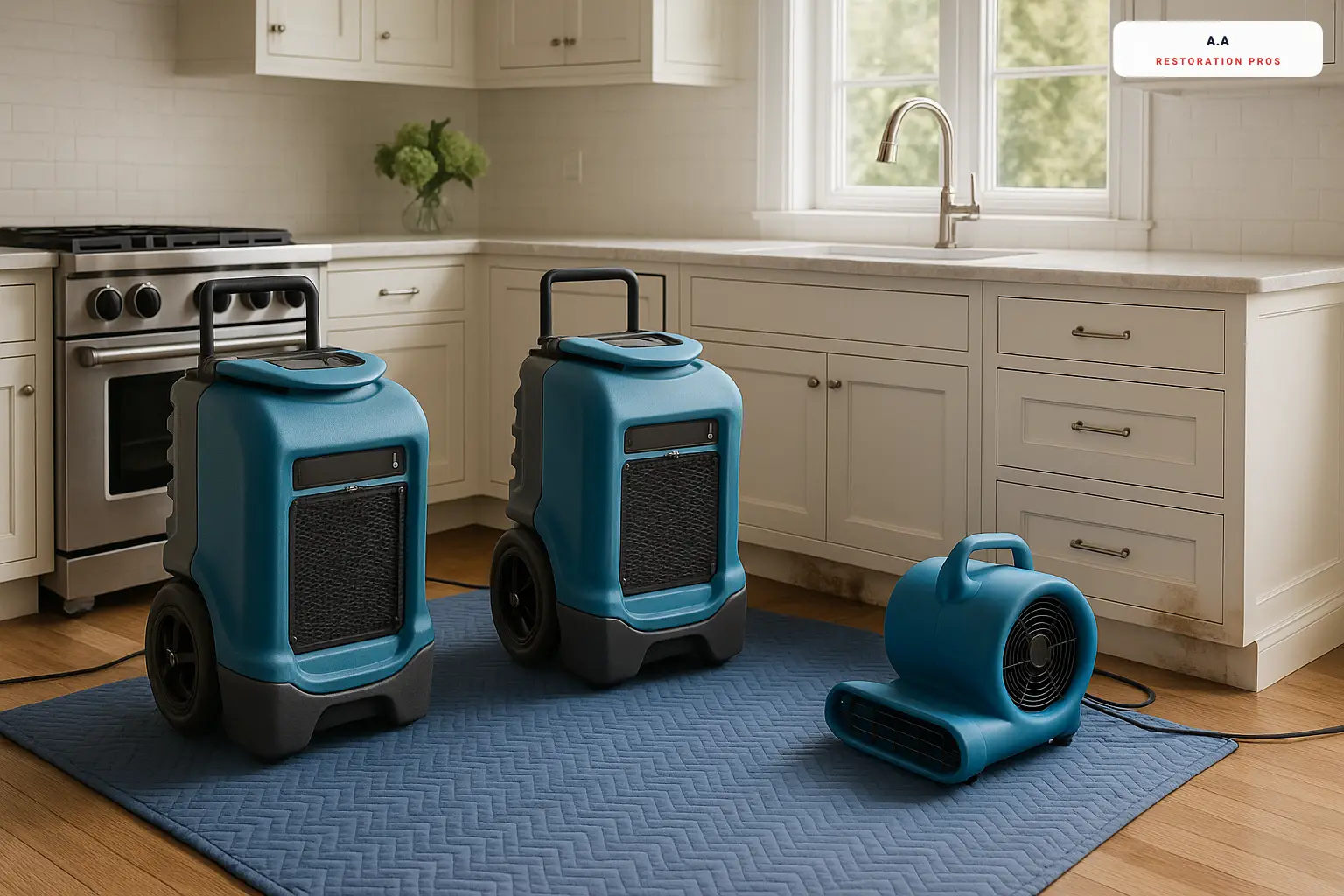
  • Industrial drying equipment
  • Daily moisture documentation
  • Insurance scope-aligned reconstruction
  • IICRC S500 protocol

Why Cutting Drying Short Is the Most Expensive Mistake

The single most common pattern that turns a $5,000 mitigation into a $40,000 mold remediation: a contractor who says "looks dry, we are done" at day three when the meter still reads above standard. Six weeks later, mold growth appears behind the wall, the carrier opens a separate claim or denies it as "improper drying," and the homeowner pays out of pocket.

Our protocol: equipment runs until every monitored substrate hits the dry standard documented for that specific material. If readings stall — which happens for hardwood + dense materials — we reposition equipment, add desiccant dehumidification if needed, and extend the run. Average residential job: 3-5 days. Hardwood-heavy jobs in older Elizabeth homes: sometimes 7-10 days. We give an honest timeline at the start and update if conditions change.

What this means for your insurance claim: every day of drying gets logged with equipment count + moisture readings. Adjusters see a complete record. No questions later about whether the job was completed properly. Mold prevention happens during drying — not after — and the documentation backs that up.

The Drying Process — What "Documented Dry" Actually Means

"Dry" is not "feels dry" or "looks dry." It is a specific moisture content reading for each substrate, measured with calibrated meters, that matches the manufacturer-approved dry standard for that material. Hardwood is different from drywall is different from concrete subfloor. We measure each separately, daily, until every wet substrate has returned to baseline.

The equipment that gets us there: high-velocity air movers (one per ~150 sqft of affected area) that move moist air off the substrate; LGR (low-grain refrigerant) dehumidifiers that pull that moisture out of the air; and HEPA-filtered negative air units when we need to contain a category-3 cleanup or prevent cross-contamination across rooms. All running continuously, monitored daily, repositioned when readings stall.

What clients sometimes ask: can the equipment run quieter? Yes — for occupied spaces we use noise-managed scheduling (loud during business hours, quiet overnight). What clients sometimes ask: can we just open the windows and skip the dehumidifier? No — outside humidity averages 60-80% in NJ, which means evaporated moisture from your substrate has nowhere to go and re-condenses. The dehumidifier exists specifically to extract the moisture from the air after the air movers release it from the substrate.

Process

Our Process

  1. 01

    Initial Inspection

    Moisture mapping with calibrated meters. Photo documentation. Cause-of-loss narrative. Loss category assignment per IICRC S500.

  2. 02

    Source Control + Containment

    Confirm water source is fully off. Isolate affected area with plastic sheeting + negative air pressure. Contaminated materials removed to documented flood line.

  3. 03

    Structural Drying

    Air mover placement calculated for affected square footage. LGR dehumidifier capacity matched to interior volume. Continuous monitoring until moisture content returns to baseline.

  4. 04

    Mold Prevention

    EPA-registered antimicrobial applied to substrate that contacted contaminated water. HVAC system inspection if water entered the air handling system. Final clearance confirms no microbial activity.

  5. 05

    Reconstruction to Pre-loss Condition

    Materials matched to pre-loss specification. Workmanship guarantee documented in the contract. Walkthrough with written punch list before final invoice.

24/7 Emergency

Active damage in Elizabeth? We are already rolling.

We dispatch a tech 24/7 across the Elizabeth metro. Average on-site time is under an hour.

Call 908-560-5415
The difference

Why Customers Choose Us

Real reasons. No invented stats, no manufactured awards.

  • 01

    24/7/365 Emergency Response

    Holidays, weekends, middle of the night — same response standard. Property losses do not check the calendar. Neither do we.

  • 02

    Multi-Unit + Commercial Capable

    COIs on file at most major Union County multi-unit buildings. After-hours noise scheduling for tenant-occupied commercial. Per-unit documentation discipline for HOA + condo claims.

  • 03

    Pre-Staged For Surge Events

    Storm season we add equipment + tech capacity at our Elizabeth base. When the call volume spikes after a major weather event, individual response times do not slip.

Service Area

Serving Union County

The Elizabeth operation works Union County daily. Linden, Hillside, Newark, and the smaller communities throughout the corridor reach in 20-40 minutes. We adjust our diagnostic approach based on the property type — older single-family, multi-unit condo, suburban townhouse, small commercial — because the NJ housing mix calls for different protocols.

Counties Covered

  • Union County, NJ

Cities We Service

Each Union city below opens a local page with arrival times from our Elizabeth base and the loss patterns we handle most often in that municipality.

Not sure if you're in our area? Call 908-560-5415 and we'll tell you in 30 seconds.
FAQ

Frequently Asked Questions

If you don't see your question, just call or message us.

Do I have to leave my home during restoration? +

For most water-damage jobs, no. We work in the affected area while you live in the rest of the home. Cat-3 sewage cleanup requires evacuation of the affected area during the cleanup phase because the work itself aerosolizes pathogens. Major fires often require temporary relocation while smoke + soot are addressed. We discuss displacement on the first call so you can plan.

What is IICRC S500 and why does it matter? +

IICRC S500 is the industry standard for water damage restoration — published by the Institute of Inspection, Cleaning and Restoration Certification. It defines water categories (Cat-1 clean, Cat-2 grey, Cat-3 contaminated), drying standards (moisture readings to baseline), and protocols for each. Restorers who follow S500 produce work that holds up. Restorers who skip it produce work that fails inspection or grows mold within months.

Can you save my hardwood floors after water damage? +

Often yes, if we get there fast and the wood has not been wet for an extended period. Our protocol: extract surface water, run targeted air movement under the floor (we use specialized hardwood drying mats), monitor moisture content with pinless meters that do not leave marks. If readings come back to dry standard, the floor is salvageable. If not, replacement is the right call — we tell you honestly which one applies.

What should I do in the first hour of a water emergency? +

Shut off the water at the main if you can locate the source. Kill power to the affected area at the breaker if water is reaching outlets. Move what you can save away from the cascade path. Photograph the loss in its current state for insurance. Then call us — we are mobilizing while you are still on the phone.

Does insurance cover sewer backup? +

Standard homeowners insurance does NOT cover sewer backup. The fix is a sewer/water backup endorsement on your policy, typically $50-150/year. Coverage is usually $5,000-$25,000 depending on the limit you select. If you have not added the endorsement, the cleanup is out-of-pocket. Add it now to protect against future events.

How do you remove smoke odor after a fire? +

Smoke odor lives in porous materials at the molecular level — air freshener does not work. We use hydroxyl generators (safe for occupied spaces, breaks down VOCs over 3-7 days), ozone treatment (faster, requires evacuation), thermal fogging, and source removal for materials that cannot be deodorized. Air quality testing verifies odor levels return to baseline before reconstruction.

What is a backwater valve and do I need one? +

A backwater valve is a one-way valve installed in your main lateral drain that closes if sewer pressure tries to push water back into your basement. Cost is $1,500-$3,500 installed. For Elizabeth properties on combined sewer or older municipal systems, it is the single most effective sewer-backup prevention measure. We can refer to qualified plumbers if you want one installed.

Call Now • Elizabeth

Active Loss in Elizabeth? We Handle Mitigation Through Reconstruction.

One phone call gets a truck rolling. Real Elizabeth team, real local response time, no automated phone tree. We'll be on site fast.

📞 Tap To Call 908-560-5415

24/7 Emergency Dispatch

📞 Call 908-560-5415